 Billionaire Brain Wave
The "Dr. Thomas Summers" Brainwave Concept: What Theta Entrainment Actually Is
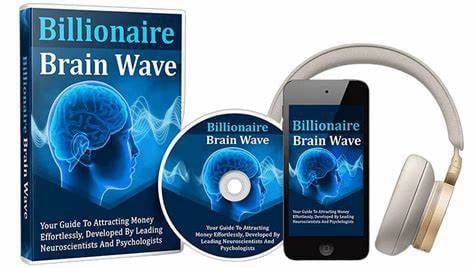
Billionaire Brain Wave's marketing credits a "Dr. Thomas Summers" with the theta-frequency concept behind the audio program. Rather than re-litigating who he is, this page explains the underlying brainwave science on its own terms - what theta waves are, what binaural-beat research actually shows, and why "brainwave scientist" branding shows up across so much of the wellness industry.
Affiliate Disclosure: This page contains an affiliate link. If you purchase through it, we may earn a commission at no additional cost to you. Read our full affiliate disclosure.
A Quick Note on "Dr. Thomas Summers" - and Where to Read More
Before getting into the science, a brief honesty check on the name attached to it. "Dr. Thomas Summers" is presented on the Billionaire Brain Wave sales page as a "leading neuroscientist" credited with the theta-frequency concept behind the audio sessions. We looked for independent, verifiable information about this person - a university affiliation, published research, or a professional licensing record - and could not confirm any of it. That doesn't automatically make the claim false, but it does mean the credential should be treated as an unverified marketing statement, not an established fact. We've dug into that specific question in much more depth on our dedicated page, Dr. Thomas Summers and Billionaire Brain Wave. This page takes a different angle: it's about the brainwave concept itself, independent of who is or isn't credited with it.
What Is a Theta Brainwave?
Your brain constantly produces tiny electrical signals as neurons communicate with each other. Tools like EEG (electroencephalography) can pick up patterns in that activity and group them into frequency bands, measured in cycles per second (Hz). Theta is one of these bands, generally described as roughly 4-8 Hz, sitting between the slower delta waves associated with deep sleep and the faster alpha waves associated with a relaxed, wakeful state.
Theta activity has been observed during light sleep, drowsiness, some meditative states, and certain kinds of focused daydreaming or memory processing. Researchers have studied it for decades in sleep labs and cognitive neuroscience settings. None of that is controversial - theta waves are a real, measurable phenomenon. What's far less settled is the leap from "theta activity exists and can be observed" to "listening to a specific audio track will reliably put your brain into a theta state and that state will improve your finances or mindset." That second claim is a marketing extrapolation, not a finding from the underlying neuroscience.
What Are Binaural Beats, and How Do They Relate?
Binaural beats are an auditory illusion. When each ear is played a slightly different steady tone through headphones - say 200 Hz in one ear and 204 Hz in the other - the brain perceives a third, phantom beat at the difference between the two (in this example, 4 Hz, which falls in the theta range). The idea behind "brainwave entrainment" is that listening to a beat at a target frequency might encourage brain activity to synchronize, or "entrain," toward that same frequency - a process sometimes called the frequency-following response.
This is why binaural-beat audio almost always requires stereo headphones rather than speakers: the illusion depends on each ear receiving a genuinely separate signal. It's also why the seven-minute session length, theta-frequency labeling, and headphone instructions you'll see in Billionaire Brain Wave's marketing line up with real audio-engineering concepts, even though the specific outcome claims built on top of them go further than the underlying science supports.
What Does the Research Actually Say?
Binaural beats and brainwave entrainment have been studied by independent researchers for decades, and it's worth being precise about what that body of work does and doesn't show, without pointing to any specific study or journal here. In broad terms:
- Some studies report modest benefits - for example, small reductions in self-reported anxiety, or subjective improvements in relaxation or mood, in certain controlled settings.
- Other studies find little or no measurable effect beyond what a quiet room, calming music, or the simple expectation of relaxation would produce on its own - sometimes described as a placebo-adjacent effect.
- Sample sizes tend to be small, study designs vary a lot, and there is no large, consistent body of high-quality evidence that settles the question either way.
- Nothing in this research is specific to cognition tied to wealth, income, or financial decision-making. Any relaxation or focus findings are general, not tied to money outcomes.
Put plainly: brainwave entrainment is a legitimate research topic with mixed, inconclusive results for relaxation and attention - and it has not been shown to produce financial outcomes of any kind. That's a meaningfully different, more cautious statement than "brainwave science" marketing copy typically implies. For a broader look at what is and isn't supported specifically for this product, see Does Billionaire Brain Wave Really Work?
Why "Brainwave Science" Branding Is Everywhere in This Niche
Billionaire Brain Wave is far from the only self-development product that leans on brainwave language. Search around the wellness and personal-growth space and you'll find a long list of audio programs, apps, and courses built around terms like theta healing, alpha-state meditation, brainwave entrainment, or subliminal audio - often paired with a named "doctor," "scientist," or "researcher" credited with discovering or refining the method.
This pattern exists for a few understandable reasons. First, brainwave entrainment is a real, if unsettled, research area, so the terminology has genuine scientific roots rather than being invented from nothing. Second, EEG and frequency-band language sounds precise and technical, which reads as credible to most listeners even without any way to verify the specific claims. Third, attaching a "Dr." title and a research-sounding backstory to a concept is a well-worn persuasion technique - it borrows the authority people associate with medicine and science, whether or not that individual's credentials can actually be confirmed. None of that proves any single product's claims are false, but it's a strong reason to evaluate each "brainwave scientist" claim on its own evidence rather than taking the framing at face value.
How the Summers Name Gets Attached to the Theta Framing Here
In Billionaire Brain Wave's specific marketing, the structure looks like this: Dave Mitchell, described on the sales page simply as "a husband and father," narrates the origin story and sells the program, while "Dr. Thomas Summers" is credited in the background as the neuroscientist who supposedly identified or developed the theta-frequency approach used in the audio. This is a common storytelling division in the direct-response marketing world - a relatable narrator delivers the pitch, while an unseen "expert" figure supplies the scientific legitimacy for the underlying method.
The theta and binaural-beat concepts referenced are, as covered above, real research topics. What isn't verifiable is that this specific person, under this specific name, is the confirmed originator of the approach, or holds the neuroscience credentials the sales page implies. Those are two separate questions - one about a genuine area of science, one about an individual's identity and credentials - and it's worth keeping them apart rather than assuming that because the science topic is real, every claim about the named expert must also be real.
Separating the science from the storytelling still leaves the program itself worth a look on its own terms.
View the Current OfferHow to Evaluate "Brainwave Scientist" Claims on Any Sales Page
A few practical checks apply well beyond this one product:
- Look for a searchable, independent trail. A real neuroscientist typically has a university profile, a list of peer-reviewed publications, or a professional license you can look up outside the product's own website.
- Separate the science topic from the person. "Theta waves are studied by neuroscientists" is true. "This specific named person is a verified neuroscientist" requires its own independent confirmation.
- Watch for outcome claims that outrun the research. Relaxation and focus have some (mixed) supporting evidence; financial or wealth-specific outcomes from audio listening do not.
- Treat headphone/frequency instructions as genuine engineering details, not proof of effectiveness - they explain how binaural beats are technically constructed, not whether they reliably work as advertised.
Our how the program works page walks through the mechanics of the daily audio sessions in more detail, and our general FAQ page covers other common questions about pricing, format, and the guarantee.
The Honest Bottom Line
Theta brainwaves and binaural-beat entrainment are real, studied concepts, not something invented for this product. But the research on them is mixed, mostly short-term, and never tested against financial or wealth-related outcomes - and it says nothing at all about the specific credentials of any individual marketer credits by name. If you're weighing whether to try Billionaire Brain Wave, it's reasonable to view the daily seven-minute audio habit as a low-stakes relaxation practice grounded in a real (if unsettled) area of science, while staying skeptical of any claim that a named "brainwave scientist" has proven it will change your financial life. For the full investigation into the Dr. Thomas Summers name specifically, read our dedicated credentials investigation, and for pricing, format, and access details, see our official audio program overview.
References
These sources speak to the broader neuroscience and mindset-research language this kind of marketing often borrows from - real research, but about general brain plasticity and mindset effects, not about this product or its uncredentialed neuroscientist claim.
- Draganski, B., Gaser, C., Busch, V., et al. (2004). Neuroplasticity: Changes in grey matter induced by training. Nature, 427, 311-312.A classic demonstration that the adult brain can physically change with sustained practice (in this case, learning to juggle) - genuine evidence for neuroplasticity in general, not evidence that any specific audio track reprograms the brain.
- Sisk, V. F., Burgoyne, A. P., Sun, J., Butler, J. L., & Macnamara, B. N. (2018). To what extent and under which circumstances are growth mind-sets important to academic achievement? Two meta-analyses. Psychological Science, 29(4), 549-571.A large-scale meta-analysis finding that mindset interventions have a very small real-world effect - useful context for treating any wealth-mindset marketing claim with proportionate skepticism.
- Tang, Y. Y., Hölzel, B. K., & Posner, M. I. (2015). The neuroscience of mindfulness meditation. Nature Reviews Neuroscience, 16, 213-225.Reviews neuroimaging evidence for how mindfulness-based practices relate to brain networks involved in attention and emotion regulation - general research on a broad practice category, not on this specific product.
Common Questions About the Brainwave Concept
What is a theta brainwave, exactly?+
Theta is a band of brain electrical activity, roughly 4-8 Hz, that shows up on EEG readings during light sleep, deep relaxation, and some meditative states. It's a real, measurable pattern, but measuring it in a lab is different from claiming a specific audio track reliably produces it in every listener.
Do binaural beats actually change your brainwaves?+
Some studies suggest binaural beats can nudge EEG activity and subjective relaxation in certain conditions, while other studies find no meaningful difference from a quiet control. The research base is small, mixed, and mostly short-term, so it doesn't support strong guarantees either way.
Is Dr. Thomas Summers a real neuroscientist?+
We could not independently verify a university affiliation, published research, or licensing record for this name. The "neuroscientist" credential comes from the product's own marketing, not from any confirmed outside source. See our dedicated investigation page for the full breakdown.
Why do so many wellness products cite "brainwave science"?+
Brainwave entrainment and binaural beats are genuine research topics, which gives marketers a real scientific term to borrow. Attaching that term to a named "doctor" or "scientist" lends an air of authority that's easier to create on a sales page than to verify independently.
Should the theta-frequency framing affect my purchase decision?+
Treat it as a marketing frame borrowed from a real but unsettled area of research, not as proof of any specific outcome. It's reasonable to view the daily audio habit as a low-stakes relaxation practice while being skeptical of any wealth-related claims attached to it.
Explore the Current Billionaire Brain Wave Offer
Pricing, bonuses, and guarantee terms are set by the official checkout page and can change. Check the current listing before you decide.
Check Current Availability