 Billionaire Brain Wave
Billionaire Brain Wave Official Site Audio: How the Format Actually Works
This page focuses narrowly on the audio itself: what the daily sessions are described as, how binaural beats function in plain terms, why headphones are non-negotiable for the format, and where the general science ends and the product-specific marketing begins.
Affiliate Disclosure: This page contains an affiliate link. If you purchase through it, we may earn a commission at no additional cost to you. This does not influence the honesty of the information provided. Read our full affiliate disclosure.
What the Official Audio Actually Is
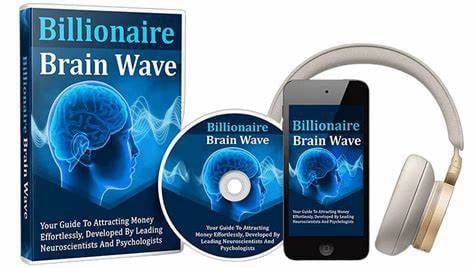
Billionaire Brain Wave is sold as a digital audio program, delivered electronically with no physical shipping. The core of the product is a series of daily listening sessions the sales material describes as roughly seven minutes long, layered with tones marketed as binaural beats tuned toward a "theta" frequency range. There's no separate "official site audio" file distinct from these sessions - the phrase simply refers to the audio format used across the program as described on the official checkout page. We cover the daily seven-minute structure in more depth on our seven-minute routine page, and this page zooms in specifically on the listening format and the audio mechanics behind it.
It's worth being precise about scope here. This page describes the format as the product markets it, not as an independently verified specification. There is no public technical spec sheet for the exact frequencies, layering, or mastering used in the tracks, so statements about "theta framing" reflect how the product describes itself rather than something we measured.
How the Listening Experience Is Described
According to the product's own marketing, each session pairs a spoken or ambient layer with an underlying binaural-beat track, intended to be played once per day. The pitch is convenience: a short, low-effort listening habit rather than a lengthy meditation session. That's a legitimate design choice from a habit-formation standpoint - shorter routines generally have a lower barrier to daily consistency than 20- or 30-minute practices - independent of whether the specific frequencies used have any special effect. For a broader walkthrough of how the program frames its overall approach, see our how it works page.
The marketing material describes the tones as layered rather than a single flat frequency for the full seven minutes - meaning the underlying beat frequency, or the ambient sound bed around it, may shift over the course of a session rather than staying static. We haven't been able to independently verify the exact structure of that layering, since the product doesn't publish a technical breakdown of each track. What can be said with confidence is that the format is consistent with how commercial binaural-beat audio is typically produced elsewhere: a spoken or musical layer on top, a stereo tone pair underneath.
Binaural Beats, Explained Plainly
Binaural beats are a real, well-documented auditory phenomenon, and it's worth explaining the mechanism on its own terms, separate from any claim about what it accomplishes. Here's the basic idea:
- A stereo audio track plays one pure tone in the left ear and a slightly different pure tone in the right ear - for example, 200 Hz in one ear and 210 Hz in the other.
- Each ear only hears its own single tone. Neither ear hears a "beat" on its own.
- The brain, processing both signals together, perceives a third, phantom pulsing tone at the difference between the two frequencies - in this example, 10 Hz. That perceived pulse is the "binaural beat."
- This is an auditory processing effect, not a sound that actually exists in the room or on the recording as a single audible frequency - it's constructed by the listener's brain from the two separate inputs.
That part - the mechanism itself - is accurate and reasonably well established in audio science. What's much less settled is the second half of the claim chain: whether listening to a specific beat frequency reliably shifts a listener's mental state (relaxation, focus, a particular "brainwave" pattern) in a meaningful, consistent way. We address that evidence gap directly in the next section.
Why Headphones Are Required, Not Optional
This is the one point in the whole format that isn't up for debate: binaural beats only work through stereo headphones or earbuds. The effect depends on delivering two distinct tones to two separate ears. Play the same track through a speaker, or through a mono speaker setup, and both ears hear the identical mixed signal - there's no longer a difference between the two tones for the brain to process into a perceived beat. The format simply doesn't function as designed without headphones.
Practically, that means:
- Any pair of stereo headphones or earbuds should work - the format doesn't require specialized or high-end audio equipment.
- Listening through a phone or laptop's built-in speakers, a Bluetooth speaker, or a car stereo defeats the mechanism, even if the audio still sounds pleasant.
- If one earbud is broken, muted, or not seated properly, the binaural effect is compromised even though the track appears to be playing normally.
Once you have headphones sorted, you can check the official listing to see the audio access details.
Check the Official Purchase OptionPractical Listening Tips
Beyond the headphone requirement, the program's general guidance (and common sense for this kind of audio) points toward a few practical habits:
- Volume: A comfortable, moderate volume is appropriate - loud enough to hear both tones clearly, but not at a level that risks hearing damage over repeated daily use. There's no evidence that louder playback makes the format "work better."
- Environment: A quiet space with minimal background noise makes it easier to notice the audio layers and reduces the temptation to multitask through the session.
- Timing: The program doesn't mandate a specific time of day. Some listeners prefer a morning session as part of a wake-up routine, others use it as a midday reset or an evening wind-down. Consistency in when you listen likely matters more for habit-building than the exact hour chosen.
- Consistency: Because the format is built around a daily habit rather than a single listen, treating it like a short daily practice - similar to a brief meditation or breathing exercise - is more in line with how it's marketed than expecting a one-time effect.
- Distractions: Since the effect depends on two distinct tones reaching two distinct ears, activities that risk pulling an earbud loose or shifting headphones mid-session (driving, exercising, operating machinery) work against both safety and the format itself - a seated, undistracted listen is more consistent with how the sessions are designed to be used.
None of these are hard technical requirements the way headphones are - they're reasonable, practical habits for getting the most out of a short daily listening routine, not claims that skipping them will make the audio ineffective.
General Research vs. Product-Specific Evidence: A Critical Distinction
This is the single most important thing to understand before evaluating the audio format, and it's worth stating plainly: general binaural-beat research and evidence for this specific product are two completely different things.
On the general side, binaural beats and brainwave entrainment have been studied for decades. There is a real body of research, including some systematic reviews, examining whether specific frequency ranges can influence relaxation, attention, mood, or anxiety. The honest summary of that literature is that it's mixed: some studies report modest benefits in certain contexts, while others find effects that are hard to separate from simply sitting quietly with headphones on, expecting a calming experience, or other placebo-adjacent factors. Nothing in that literature amounts to a settled, one-directional finding that binaural beats reliably produce a specific outcome for all listeners.
On the product-specific side, there is no independent, peer-reviewed research testing Billionaire Brain Wave itself - not its specific tracks, its particular frequency choices, or its claimed effects on mindset or wealth-related thinking. Any claim that ties the general binaural-beat literature directly to this product's outcomes is a marketing inference, not a documented result. We go into this distinction in much more detail, including how the product's specific claims compare to what published research actually supports, on our Does Billionaire Brain Wave Really Work? page.
Put simply: it's accurate to say "binaural beats have been studied, with mixed results, for relaxation and focus." It is not accurate to say "science proves this program's audio changes your brain for wealth." We deliberately avoid the second kind of statement anywhere on this site.
Where the Audio Fits Into the Full Program
The daily audio sessions are the core of the product, but the checkout bundle at the time of writing also includes non-audio bonus items - a Warren Buffett Pyramid investing guide, a 7 Lazy Millionaire Habits guide, and a Quick Cash Manifestation audio track. Bundled offerings can change, so it's worth confirming the current lineup on the official checkout page. For a complete breakdown of every component, including how the audio sessions relate to the bonus material, see our full program breakdown.
Setting Realistic Expectations for the Format
A short daily audio habit, on its own, is a modest thing - not a financial strategy and not a guaranteed neurological intervention. What the format can reasonably offer is a low-effort listening routine that some people find calming or focus-supporting, similar to other short audio-based relaxation practices. What it cannot honestly offer is a scientifically verified path to wealth, and no legitimate source, including this one, should claim otherwise. If you're weighing whether to try it, our FAQ page covers pricing, the guarantee, and other common questions beyond the audio format itself.
The format's simplicity is also its biggest limitation as a claim. Because a binaural-beat track is, mechanically, just two tones and a beat frequency, it's easy for marketing copy to attach almost any desired outcome to it - focus, wealth mindset, confidence - without that outcome being tied to anything measurable about the audio itself. Understanding the mechanism helps separate the parts of the pitch that are technically accurate (the stereo tone-pair setup, the headphone requirement) from the parts that are aspirational marketing language layered on top of a real but modest audio technique.
References
These three sources are the most direct research on binaural beats as an audio phenomenon - the closest thing to hard evidence for the mechanism this page describes. None of them tested Billionaire Brain Wave specifically.
- Ingendoh, R. M., Posny, E. S., & Heine, A. (2023). Binaural beats to entrain the brain? A systematic review of the effects of binaural beat stimulation on brain oscillatory activity, and the implications for psychological research and intervention. PLOS ONE.Reviewed 14 studies: 5 supported the brainwave-entrainment hypothesis, 8 contradicted it, and 1 was mixed - the authors conclude methodological inconsistency limits firm conclusions.
- Garcia-Argibay, M., Santed, M. A., & Reales, J. M. (2019). Efficacy of binaural auditory beats in cognition, anxiety, and pain perception: a meta-analysis. Psychological Research, 83, 357-372.A meta-analysis of 22 studies found a medium, statistically significant effect on cognition, anxiety, and pain perception - evidence of some effect, not proof of any specific product's claims.
- Chaieb, L., Wilpert, E. C., Reber, T. P., & Fell, J. (2015). Auditory beat stimulation and its effects on cognition and mood states. Frontiers in Psychiatry, 6, 70.A review of 30 studies on monaural and binaural beat stimulation, describing it as a promising but still early-stage tool for influencing cognition and mood, not an established one.
Questions About the Audio Format
Do I really need headphones for the Billionaire Brain Wave audio?+
Yes. Binaural-beat audio depends on each ear receiving a slightly different tone. Speakers let both ears hear the same mixed sound, which defeats the mechanism the format relies on, so stereo headphones or earbuds are necessary for the effect to work as intended.
How long are the official audio sessions?+
The sessions are marketed as roughly seven minutes each, meant to be listened to daily. Exact runtimes can vary slightly by track, so treat seven minutes as the described target length rather than an exact guarantee.
What are binaural beats, in plain terms?+
Binaural beats happen when each ear is played a pure tone at a slightly different frequency through stereo headphones. The brain perceives a third, phantom "beat" at the difference between the two frequencies. This is a well-documented auditory phenomenon, separate from any claim about what that perceived beat does for the listener.
Is there research proving this specific audio program works?+
No. There is a body of general research on binaural beats and brainwave entrainment for relaxation, focus, and attention, with mixed results. No independent, peer-reviewed study has tested Billionaire Brain Wave as a specific product, so any effectiveness claims about this exact program are marketing, not documented findings.
When and how should I listen for the best experience?+
The program generally suggests a quiet setting, a comfortable and safe volume, and consistent daily listening. Beyond that, timing is a matter of personal routine - morning, a work break, or evening wind-down - rather than a documented requirement.
Check the Current Billionaire Brain Wave Listing
Pricing, bonuses, and guarantee terms are set by the official checkout page and can change. Verify the current offer before you decide.
Check Current Availability